South Africa
Must-visit destination for an unforgettable safari
South Africa
South Africa is a fascinating country with remarkably diverse ecosystems. Its territory encompasses vastly different biomes, where savanna, desert, mountains, and coastal forests side by side. This natural richness creates an ideal habitat for an exceptional density of wildlife, making the Kruger region the beating heart of the African safari.
The Greater Kruger: A borderless ecosystem
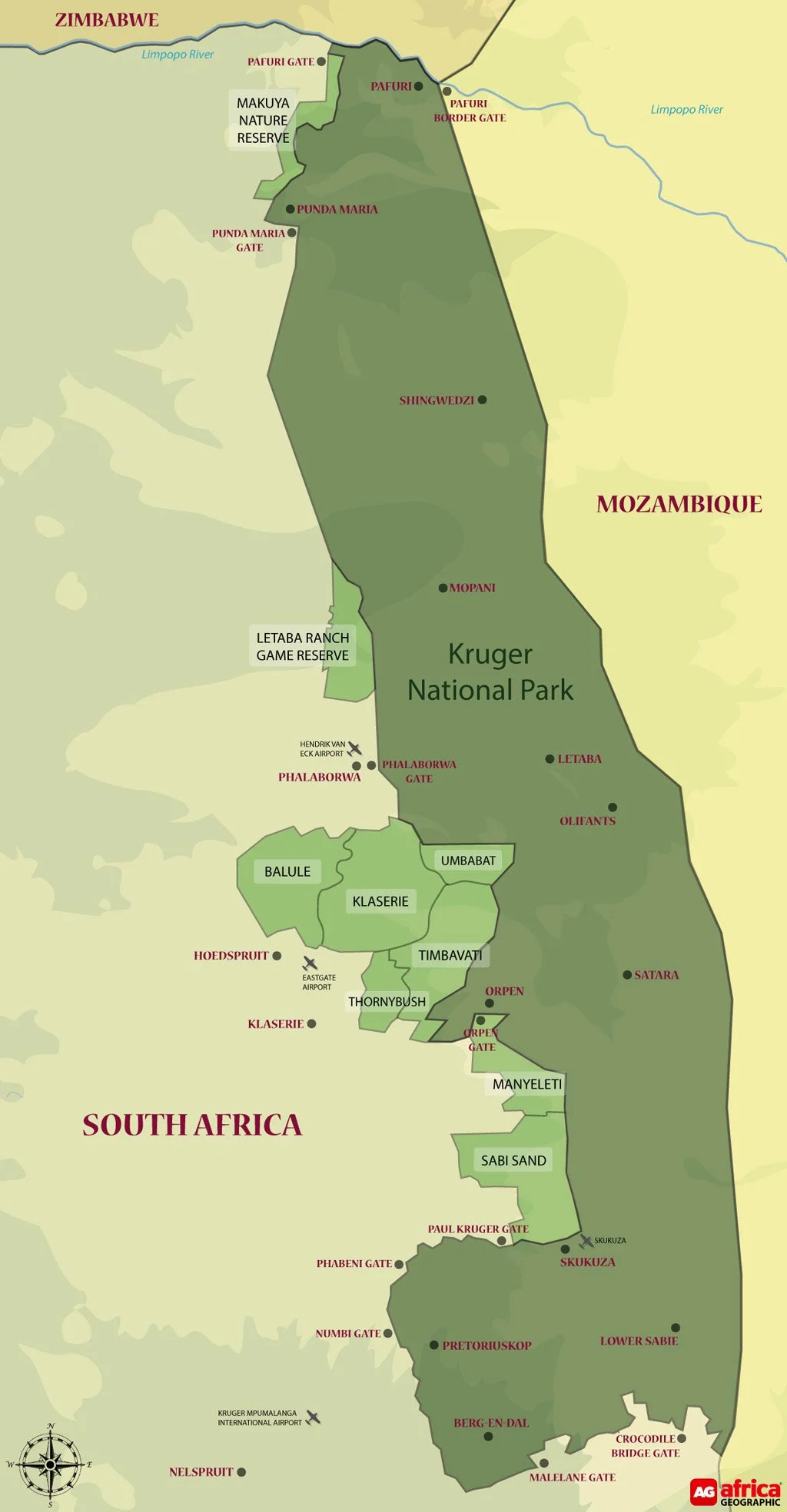
Spanning over 2 million hectares to the borders of Mozambique and Zimbabwe, the Kruger National Park is bordered to the west by the Greater Kruger—a collection of renowned private reserves such as Timbavati, Klaserie, Sabi Sands, and Manyeleti.
Thanks to the removal of fences between these reserves and the national park, wildlife moves completely freely, offering one of Africa’s most iconic safari experiences.
The magic of private reserves
Access to private reserves is strictly reserved for staying guests. The number of vehicles permitted at a single wildlife sighting is strictly regulated, preventing overcrowding around the animals. Guides are also authorized to drive off-road to track select species up close. Furthermore, unlike the public park with its strict gate closing times, these reserves allow you to extend your drive after sunset to observe nocturnal wildlife. By day, you can also explore the bush on guided walking safaris led by a ranger, allowing you to experience the savanna with a whole new intensity.
A word from your guide
It was here, in South Africa, that I trained as a professional safari guide. I learned to read tracks, decipher animal behavior, and let the rich diversity of nature spark my passion. Today, every return to the South African bush feels like coming home, and it’s this field experience that I love sharing with the travelers I guide.
South Africa is the journey that changed my life, and I hope it sparks that same feeling of freedom in you.
With Elle Into The Wild, take the time to live in the present moment and reconnect not only with nature, but also with yourself.
Practical information
-
South Africa can be visited all year-round, but the experience varies depending on the season:
Dry season (May to October): The best time for wildlife viewing. The vegetation is sparse and water sources shrink, grouping animals together and making them much easier to spot.
Green season (November to April): Lush green landscapes, warm temperatures, and tropical afternoon showers. While dense foliage makes wildlife harder to spot, it is the ideal season for birdwatching and newborn animals.
-
For French, Belgian, and Swiss citizens, no visa is required for tourist stays of under 90 days. An entry stamp will be issued free of charge upon arrival.
(If you hold another nationality, please check the requirements with the South African embassy in your home country).
Please note: A new requirement for travelers has been introduced : the SARS digital customs declaration, which must be completed online prior to departure: https://www.sars.gov.za/travellerdeclaration/
-
Here you can find the Pasteur Institute’s recommendations for South Africa.